Cumbria’s weather is unlike most other parts of the UK. With high rainfall, strong winds, cold winters, and occasional heavy snowfall, especially in the Lake District and surrounding rural areas, roofs here work harder than almost anywhere else in the country.
From traditional stone cottages and slate roofs to post-war semis and modern new builds, the local climate plays a major role in how long a roof lasts, how well it performs, and how often it needs maintenance. Understanding how Cumbrian weather affects your roof can help homeowners and landlords spot problems early and avoid costly repairs.
Key Takeaways for Cumbrian Homeowners
Cumbria’s high rainfall and wind significantly shorten roof lifespan without maintenance
Small defects can quickly turn into leaks in persistent wet weather
Wind, snow, and freeze–thaw cycles all contribute to roof deterioration
Regular inspections and timely repairs are essential in this region
Why Cumbria’s Climate is Tough on Roofs?
Cumbria regularly records some of the highest rainfall levels in England. Add exposed locations, upland winds, and winter frost cycles, and it creates challenging conditions for any roofing system.
The most common weather-related stressors include:
Persistent and heavy rainfall
Strong winds and storms
Cold temperatures and freeze–thaw cycles
Snow build-up in winter
High moisture levels year-round
Each of these elements impacts roofing materials in different ways.
Heavy Rainfall and Ongoing Moisture
Prolonged rain is one of the biggest threats to roofs in Cumbria. Even small weaknesses can quickly turn into leaks when rain is constant rather than occasional.
Common rain-related issues include:
Water tracking under loose or cracked tiles
Saturated felt or underlay
Leaks around chimneys, valleys, and roof junctions
Overflowing or blocked gutters forcing water back under the roof edge
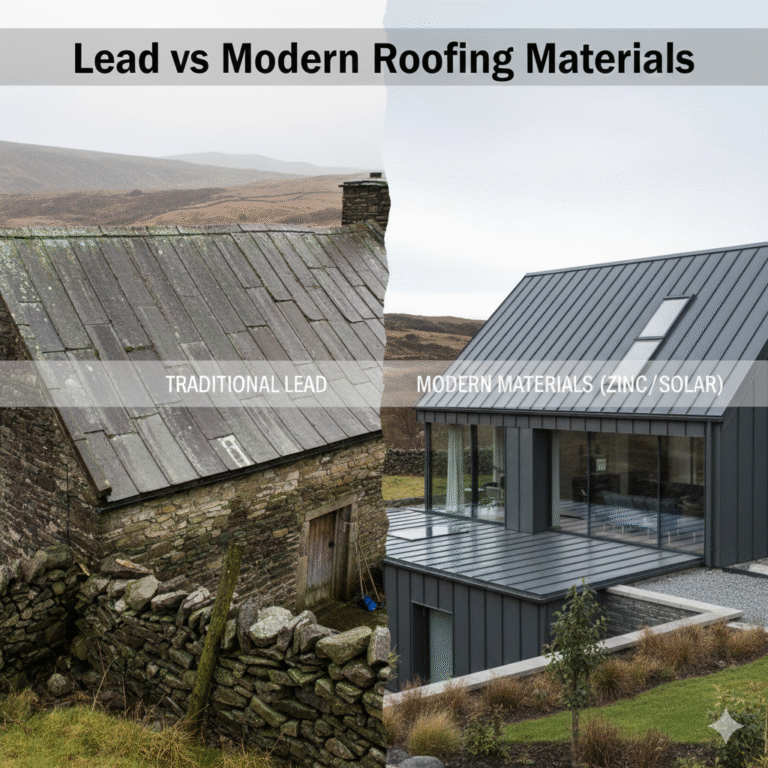
Traditional slate roofs, common on older Cumbrian homes, are excellent at shedding water when well maintained. However, slipped slates, corroded fixings, or worn flashing can allow water to penetrate over time.
Moss and Algae Growth
Damp conditions encourage moss, lichen, and algae to grow on roof surfaces, especially on north-facing slopes.
While moss might seem harmless, it:
Holds moisture against tiles or slates
Can lift tiles as it grows
Accelerates surface wear
Blocks gutters and downpipes when it breaks away
Strong Winds and Storm Damage
Cumbria’s exposed coastal areas and upland regions experience frequent high winds. Over time, this can loosen fixings and dislodge tiles or slates, particularly on older roofs.
Ridge tiles and verge tiles
Slates fixed with ageing nails
Poorly installed or repaired sections
Flat roof edges and flashings
Even a single missing tile can allow wind-driven rain to penetrate deep into the roof structure, leading to damp insulation, timber decay, and internal water damage if left unaddressed.
If your roof has been affected by strong winds or recent storms, or you’ve noticed loose tiles, debris in the garden, or signs of a leak, it’s important to have it checked as soon as possible. Westmorland Roofing can assess storm damage quickly and advise on safe, practical repairs suited to Cumbrian conditions, helping to prevent further deterioration and unnecessary costs.
Pressure on Roof Structures
Strong winds don’t just affect coverings, they place stress on the roof structure itself. Older properties, including stone cottages and early terraced homes, may have roof timbers that weren’t designed for today’s weather extremes.
Snow, Ice, and Freeze–Thaw Cycles
Snowfall, while less frequent than rain, can still cause issues in Cumbria, particularly in higher areas.
Problems caused by snow include:
Excess weight on roof structures
Snow sliding and damaging gutters
Ice dams forming at roof edges
Blocked valleys and downpipes
Flat roofs are especially vulnerable if drainage is poor, as standing water can freeze and expand.
Freeze–Thaw Damage
Water that enters small cracks or gaps can freeze overnight and expand, widening those gaps over time. This freeze–thaw cycle can:
Crack tiles and slates
Split mortar on ridge tiles
Damage flashing and pointing
Weaken roof coverings year after year
Temperature Changes and Condensation
Cumbrian homes often have cold loft spaces due to low winter temperatures. Without proper ventilation and insulation, warm air from inside the house can condense in the roof space.
This can lead to:
Damp insulation
Timber rot in rafters and joists
Mould growth
Reduced energy efficiency
Condensation is often mistaken for a roof leak, but both issues can cause serious long-term damage if ignored.
How Different Cumbrian Property Types Are Affected?
Often roofed with natural slate, these properties are built to withstand weather but rely heavily on regular maintenance. Failing fixings and aged underlay are common issues.
Terraced and Semi-Detached Homes
Shared rooflines mean problems can spread from one property to another. Wind damage or blocked gutters on one section can affect neighbouring homes.
Post-War Builds
These roofs may have thinner materials and older felt systems that struggle with prolonged moisture exposure.
Modern New Builds
While better insulated, new builds can still suffer from poor workmanship, especially around flashing, ventilation, and flat roof sections.
How to Protect Your Roof in Cumbrian Conditions?
Annual inspections and checks after major storms are essential in Cumbria. Early repairs prevent small issues becoming major problems.
Keep Gutters Clear
Blocked gutters are one of the most common causes of water ingress in wet regions.
Maintain Flashings and Ridges
Lead flashing, ridge tiles, and mortar joints take the brunt of weather exposure and should be checked regularly.
Ensure Proper Ventilation
Good airflow in the roof space reduces condensation and helps timbers and insulation stay dry.
If you’re worried about the condition of your roof or suspect damage from recent weather, Westmorland Roofing is here to help. We provide reliable roofing inspections, repairs, and maintenance services across Cumbria, with a clear understanding of local property types and weather challenges. Whether it’s storm damage, ageing materials, or general wear and tear, our experienced team can offer honest advice and practical solutions. Get in touch with Westmorland Roofing for expert guidance and a no-obligation quote tailored to your home or property.