The best roofing material is one that offers long-lasting protection, durability, and reliability in your local climate while suiting the structure and style of your property. It should be highly resistant to rain, wind, frost and UV damage, provide excellent waterproofing, and require minimal maintenance over time. A top-quality roofing material will also offer strong insulation, resist moss and algae growth, withstand structural movement, and remain visually appealing for decades. In areas like Cumbria, the best roofing material is one that can handle constant moisture, harsh weather conditions, and older building styles, while still delivering strength, safety, energy efficiency, and long-term value for the homeowner.
The main differentiators between roofing materials come down to durability, weather resistance, lifespan, maintenance needs, cost, weight, appearance, and suitability for the local environment. Some materials, like natural slate and metal, offer superior resistance to heavy rain, frost, and high winds – making them ideal for harsh areas like Cumbria – while others, such as concrete or clay tiles, provide a balance of strength, affordability, and visual appeal. Flat roofing options like EPDM rubber stand out for their complete waterproofing and flexibility, whereas lighter materials may be easier to install but less resilient in extreme conditions. Ultimately, the best roofing material is differentiated by how well it performs in your specific climate, how long it lasts without frequent repairs, how well it suits your property type, and how effectively it protects your home from long-term water and weather damage.
The best roofing materials for long-term performance in UK and Cumbrian conditions are slate, clay or concrete tiles, metal roofing (steel or aluminium), EPDM rubber, fibre cement, composite/synthetic materials, and high-quality asphalt and wood shingles. Slate and clay tiles stand out for their exceptional durability, weather resistance, fire safety, and 75–100+ year lifespan, making them ideal for traditional and exposed properties. Metal roofing is highly regarded for its strength, energy efficiency, low maintenance, and ability to withstand heavy rain and strong winds. EPDM rubber is one of the best solutions for flat roofs due to its complete waterproofing and flexibility. Fibre cement and composite materials provide a lightweight yet durable alternative that mimics natural materials at a lower cost, while premium asphalt shingles remain a popular, cost-effective option for residential roofs where extreme weather isn’t as severe. The “best” material ultimately combines longevity, weather resistance, structural suitability, low maintenance, and proven performance in damp, windy climates like Cumbria.
Here are the best roofing materials in Cumbria:
- Slate Roofing: Slate roofing is one of the longest-lasting and most durable roofing options available. It is highly resistant to rain, wind, frost and fire, making it ideal for exposed and traditional properties in harsh climates like Cumbria.
- Metal Roofing (Steel / Aluminium / Zinc / Copper): Metal roofing is lightweight, extremely strong and designed to withstand severe weather conditions. It is energy-efficient, low maintenance and performs exceptionally well in coastal and high-wind areas.
- EPDM Rubber Roofing: EPDM rubber is a premium flat roofing material known for its complete waterproofing and flexibility. It resists cracking, standing water and UV damage, making it perfect for wet and cold environments.
- Fibre Cement Roofing: Fibre cement roofing is strong, lightweight and resistant to moisture, rot and mould. It offers reliable long-term performance with minimal maintenance in damp and changeable climates.
- Composite / Synthetic Roofing: Composite roofing is made from recycled materials and designed to mimic the appearance of slate, tile or wood. It is durable, lightweight, cost-effective and easier to install on older structures.
- High-Quality Asphalt Shingles: High-quality asphalt shingles are an affordable and versatile roofing option for many residential properties. They provide decent weather protection and come in a wide range of colours and styles, though they have a shorter lifespan than slate or metal.
- Wood Shingles & Shakes: Wood shingles and shakes provide a natural, rustic and visually appealing finish, often used on cottages and heritage-style properties. They offer good insulation and airflow, but require regular maintenance and proper treatment to improve fire and moisture resistance.
Clay & Concrete Tiles
Clay and concrete tiles are regarded as one of the best roofing materials because of their outstanding durability, weather resistance, and classic visual appeal. These tiles have been used for centuries in the UK and across Europe, proving their ability to stand the test of time. In areas with heavy rainfall, strong winds, and changing temperatures, such as Cumbria and much of the UK, clay and concrete tiles perform exceptionally well. They do not easily warp, rot, or deteriorate, making them a long-term investment rather than a short-term fix.
Clay tiles are made from natural earthen materials fired at very high temperatures, which gives them their signature colour and strength. Concrete tiles, on the other hand, are manufactured and slightly more affordable, while still offering excellent resistance to impact and weather damage. Both options are non-combustible, environmentally friendly and can last 50–100 years or more when installed properly.
Best for: Family homes, semi-detached or detached houses, and rural properties across Carlisle, Penrith, and Workington.
Cost: Mid-range to upper-mid, £40–£120 per m² depending on material.
Lifespan: 50–100 years for clay, 40–60 years for concrete tiles.
Ideal Cumbria Climate Conditions: Works well in areas with heavy rainfall, coastal winds, frost, and fluctuating temperatures. Resistant to rot and impact from hail or falling debris.
Why it’s ideal: Clay and concrete tiles are extremely durable and weather-resistant. They handle heavy rainfall, strong winds, and temperature fluctuations well, while offering a classic look.
Budget guidance: Ideal for mid-budget homeowners looking for a long-lasting roof without the premium cost of slate. Tiles provide a balance of durability, aesthetic appeal, and affordability.
Pros:
Extremely durable and long-lasting
Highly resistant to rain, wind, frost and sunlight
Fire-resistant and eco-friendly
Adds traditional character and value to a property
Cons:
Very heavy and requires strong roof support
More expensive to install than asphalt or metal
Can crack under significant impact
Repairs may be more complex due to weight and design
Slate Roofing
Slate is widely considered one of the most premium and best roofing materials available. It is a completely natural stone that offers unmatched longevity and timeless beauty. A properly installed slate roof can last well over 100 years, making it a true lifetime roofing solution. It is particularly popular on heritage buildings, period homes, and high-end properties due to its sophisticated appearance and long-term value.
In addition to its visual appeal, slate is completely fireproof, mould-resistant, and highly water-resistant. It performs exceptionally well in cold, wet, and windy climates, which makes it ideal for many regions across the UK. Once installed, it requires very little maintenance compared to other materials.
Best for: Traditional cottages, heritage stone houses, older farmhouses, and high-end homes in picturesque areas such as Keswick, Ambleside, and Windermere.
Cost: Premium, typically £150–£300 per m² installed.
Lifespan: 75–100+ years with proper maintenance.
Ideal Cumbria Climate Conditions: Perfect for exposed locations with heavy rainfall, frost, wind, and fluctuating temperatures. Slate is non-porous, fireproof, and highly durable.
Why it’s ideal: Slate is one of the longest-lasting roofing materials available, often exceeding 100 years. It is fireproof, highly durable, and resistant to harsh weather, making it perfect for exposed and historic properties.
Budget guidance: High-budget homeowners benefit from its longevity and low maintenance. Slate is less suitable for those seeking a low-cost solution.
Pros:
One of the longest-lasting roofing materials (100+ years)
Natural, beautiful, premium appearance
Fireproof and highly weather-resistant
Very low maintenance over time
Cons:
High material and installation costs
Very heavy and needs reinforced structural support
Needs professional, specialist installation
Repairs can be challenging if tiles break
Metal Roofing
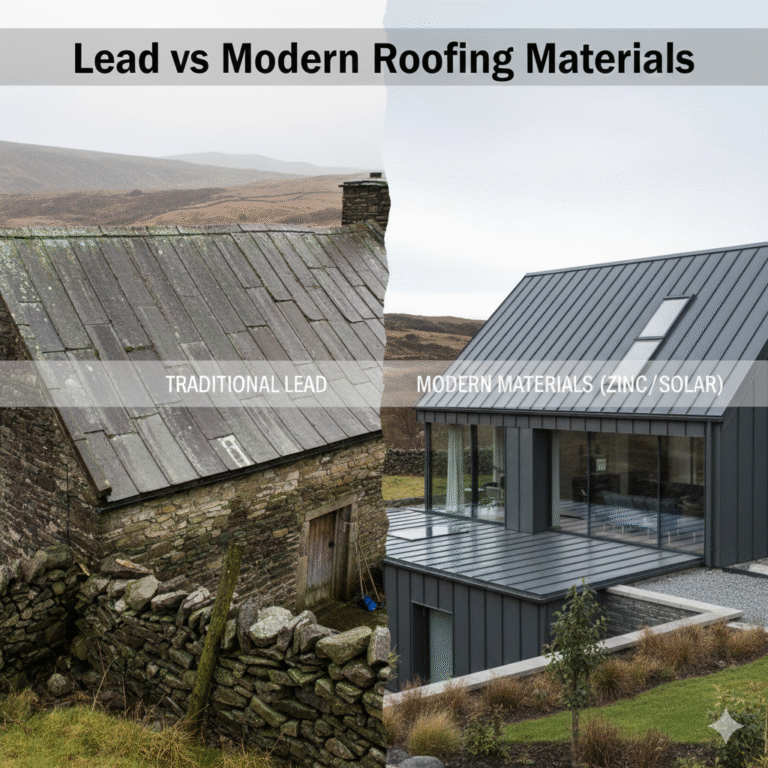
Metal roofing has become one of the best modern roofing options due to its combination of strength, lightweight construction, and energy efficiency. It is commonly made from materials such as aluminium, steel, zinc or copper, and is available in sheets or tile-style panels. Its sleek and contemporary look makes it popular for both residential and commercial buildings.
Metal roofs are designed to withstand extreme weather, including high winds, snow, and heavy rain. They reflect heat from the sun, helping to regulate indoor temperature and improve energy efficiency, which can reduce heating and cooling costs. Many metal roofs can last 40–70 years with minimal maintenance.
Best for: Rural homes, barns, coastal properties in Barrow-in-Furness, Whitehaven, and exposed cottages on the fells.
Cost: Mid-range to upper-mid, £80–£150 per m² installed.
Lifespan: 40–70 years depending on material and finish.
Ideal Cumbria Climate Conditions: Excellent for exposed and coastal locations. Highly resistant to wind, heavy rain, snow, and frost. Reflective surfaces help with heat regulation in summer.
Why it’s ideal: Metal roofs are lightweight yet strong, resistant to corrosion, high winds, fire, and extreme weather. They are energy-efficient and require minimal maintenance, making them perfect for exposed or remote properties.
Budget guidance: Suitable for mid to upper-mid budgets, especially for homeowners prioritising durability and low maintenance in challenging weather conditions.
Pros:
Lightweight but extremely strong
Resistant to corrosion, wind, fire and pests
Energy-efficient and reflective
Quick to install and environmentally recyclable
Cons:
Can be noisy during heavy rain without insulation
May dent under heavy impact (e.g., large hail)
Higher upfront cost than shingles
Needs correct installation to prevent expansion issues
Asphalt Shingles
Asphalt shingles are one of the most commonly used roofing materials worldwide due to their affordability, versatility, and ease of installation. They are made from a fibreglass base coated with asphalt and mineral granules, which protect against UV rays and weather damage. This makes them a popular choice for budget-conscious homeowners who still want reliable protection.
They are available in a variety of colours and styles, allowing homeowners to customise the look of their property. While they don’t last as long as slate or tile, they still provide dependable performance and are much easier and cheaper to repair or replace when needed.
Best for: Modern homes, budget-conscious properties, and sheltered areas with moderate weather exposure.
Cost: Lower to mid-range, £50–£80 per m².
Lifespan: 20–30 years, depending on quality and installation.
Ideal Cumbria Climate Conditions: Suitable for sheltered locations or homes with moderate exposure. Less durable under extreme wind, frost, or prolonged rainfall.
Why it’s ideal: Asphalt and composite roofing are affordable, versatile, and available in a wide range of colours and styles. They offer reliable protection for homes not exposed to extreme weather.
Budget guidance: Suitable for homeowners on a tight budget or short-term property owners. Less ideal for exposed Cumbrian locations where long-term durability is a priority.
Pros:
Cost-effective and widely available
Easy and quick to install
Available in many colours and designs
Simple to repair or replace
Cons:
Shorter lifespan (15–30 years)
Less durable in extreme weather conditions
Can be damaged by high winds
Not as environmentally friendly as natural materials
EPDM & Rubber Roofing
EPDM (Ethylene Propylene Diene Monomer) rubber roofing is one of the best materials for flat and low-slope roofs. It is known for its exceptional waterproofing capabilities, flexibility and ability to expand and contract with temperature changes. This makes it ideal for garages, extensions, commercial buildings and modern homes with flat roof designs.
Rubber roofing provides a seamless, watertight barrier that protects against leaks, UV damage and harsh weather conditions. With proper installation and minimal maintenance, an EPDM roof can last 40–50 years, making it a cost-effective and reliable option.
Best for: Flat roofs, garage extensions, outhouses, and modern low-slope properties.
Cost: Budget to mid-range, £50–£100 per m².
Lifespan: 40–50 years with proper installation.
Ideal Cumbria Climate Conditions: Fully waterproof and flexible, ideal for regions with heavy rainfall, frost, and fluctuating temperatures. Performs well on flat roofs that require complete water protection.
Why it’s ideal: EPDM rubber is fully waterproof, flexible, and resistant to UV damage and temperature fluctuations. It is particularly effective in wet climates like Cumbria.
Budget guidance: Ideal for budget-conscious homeowners or as a reliable solution for smaller structures. Best used for flat roofs rather than pitched main roofs.
Pros:
100% waterproof and leak-resistant
Excellent flexibility in all temperatures
Low maintenance requirements
Ideal for flat and low-slope roofs
Cons:
Not suitable for steep or traditional roofs
Can be punctured by sharp objects
Appearance is more industrial
Needs professional fitting for best results
Wood Shingles & Shakes
Wood shingles and shakes offer a natural, rustic and highly attractive appearance that is often chosen for cottages, countryside homes and heritage-style properties. Typically made from cedar, redwood or pine, they provide excellent insulation and allow the home to “breathe,” helping with ventilation and interior comfort.
While they are visually stunning, wood roofs require more regular maintenance than most modern materials. They must be treated to resist fire, mould and insect damage, especially in damp climates. With proper care, however, they can still last 30–40 years and offer one of the most charming roof finishes available.
Best for: Rustic cottages, heritage-style homes, and countryside properties across Cumbria.
Cost: Mid to upper-mid, depending on timber type and maintenance requirements.
Lifespan: 30–40 years with proper care and treatment.
Ideal Cumbria Climate Conditions: Works best in rural or sheltered locations, though regular maintenance is required to protect against dampness, frost, and moss growth.
Why it’s ideal: Wood shingles and shakes provide a natural, rustic appearance and excellent insulation. They are environmentally friendly and ideal for homes seeking traditional charm.
Budget guidance: Best for mid to upper-mid budgets where aesthetic and insulation value is important. Wood requires regular maintenance to remain fire and moisture resistant.
Pros:
Natural, beautiful and unique appearance
Good natural insulation
Environmentally friendly material
Ideal for heritage and cottage-style properties
Cons:
Requires regular maintenance and treatments
Less fire-resistant unless specially treated
Vulnerable to mould and insect damage
Shorter lifespan without proper care
Which Roofing Material Is Best for My Budget and Property Type?
Selecting the right roofing material depends not only on your home’s style and location but also on your budget and long-term goals. In Cumbria, where homes range from historic stone cottages to modern family houses, choosing the most suitable material ensures durability, aesthetic appeal, and protection against the region’s challenging weather. By aligning your budget with your property type and long-term goals, you can select a roofing material that offers the right balance of durability, style, and protection for your Cumbrian home.
High Budget, Long-Term & Heritage Value – Slate Roofing
For homeowners willing to invest in the best, slate roofing is ideal. It offers exceptional longevity of 75–100+ years, minimal maintenance, and a timeless appearance that complements traditional cottages, farmhouses, and heritage properties across Keswick, Ambleside, and Windermere. Slate is perfect for those seeking long-term value and classic charm.
Mid-Budget, Durable & Balanced – Clay or Concrete Tiles, Metal Roofing
Clay and concrete tiles provide durability, excellent weather resistance, and a classic look at a mid-range cost, making them suitable for family homes and semi-detached houses. Metal roofing offers similar durability with added benefits of low maintenance and strong resistance to wind and rain, making it ideal for exposed or coastal properties. Both options balance cost, longevity, and performance.
Mid-Budget, Rural or Coastal, Low Maintenance – Metal Roofing, EPDM Roofing (for Flat Roofs)
For rural homes, barns, or coastal properties in Barrow-in-Furness, Whitehaven, or exposed fells, metal roofing is highly durable, lightweight, and resilient against harsh weather. EPDM rubber is ideal for flat roofs or extensions, providing waterproof protection with minimal upkeep. Both options suit homeowners prioritising low maintenance in challenging locations.
Budget-Conscious or Short-Term Stay – Asphalt/Composite Roofing or EPDM (Flat Roofs)
For modern homes, budget-conscious homeowners, or short-term property owners, asphalt or composite roofing offers a cost-effective solution with decent weather resistance. EPDM roofing is also an economical choice for flat roofs, ensuring waterproofing without a high upfront cost. These materials are suitable for sheltered locations or where immediate affordability is a priority.
Rural Cottages Seeking Rustic Charm – Wood Shingles (with Regular Maintenance)
Wood shingles and shakes add natural warmth and traditional charm, perfect for rustic cottages or heritage-style homes in the countryside. While maintenance is required to protect against moisture and moss growth, the aesthetic and insulation benefits make wood shingles a popular choice for rural properties in Cumbria. By weighing property type, climate, lifespan, maintenance, budget, aesthetics, and environmental impact, you can make an informed decision and choose the roofing material that provides the best protection and appearance for your Cumbria home.
What is the Most Expensive Roofing Material?
The most expensive roofing material is generally natural slate. Slate is quarried from metamorphic rock and is prized for its unmatched durability, fire resistance, and timeless aesthetic. It can last 75–100+ years with minimal maintenance, making it a long-term investment for heritage homes, traditional cottages, and high-end properties. The high cost comes from both the material itself and the specialised installation required, as slate is heavy and requires skilled craftsmen to ensure proper fitting and longevity.
Other premium options, such as high-quality clay tiles or copper metal roofs, also come at a significant cost, but natural slate remains the top choice for those seeking luxury, durability, and a classic look. While the upfront expense is considerable, many homeowners view slate roofing as a worthwhile investment, as it maintains property value and offers long-term protection against Cumbria’s harsh weather, including heavy rain, frost, and coastal winds.
What Is the Cheapest Roofing Material?
The most affordable roofing material is typically asphalt shingles or composite roofing. These materials are lightweight, easy to install, and widely available in a range of colours and styles. They provide decent protection against rain and moderate weather, making them a practical choice for modern homes or properties where cost is a priority. The lower upfront cost makes them accessible for homeowners on a tight budget or those looking for a temporary solution.
While inexpensive, asphalt and composite roofs have a shorter lifespan, usually around 20–30 years, and require more maintenance in exposed areas. They are less suited to Cumbria’s harsher climate, especially in coastal or elevated locations where heavy rainfall, strong winds, and frost are common. For budget-conscious homeowners, these materials provide a functional roofing option but may need replacing sooner than more durable choices like slate, clay tiles, or metal.
How Do You Choose the Best Roofing Material?
Choosing the right roofing material in Cumbria requires careful consideration of several key factors to ensure your home is protected, looks great, and suits your budget. With the region’s frequent rainfall, strong coastal winds, frost in higher areas, and the prevalence of traditional stone cottages and farmhouses, the wrong choice can lead to costly repairs and reduced comfort.
1. Consider Your Property Type and Style
Traditional cottages and heritage homes often suit slate or clay tiles, which preserve historic charm. Modern builds may work better with metal or composite materials that offer flexibility in style and colour. Wood shingles are ideal for rustic cottages, while flat-roofed extensions or garages benefit from EPDM rubber.
2. Assess Local Climate Conditions
Cumbria’s weather is a major factor. Choose materials that can withstand heavy rain, frost, coastal winds, and moss growth. Slate, clay, concrete, and metal roofing all perform well under these conditions, while asphalt shingles may need more maintenance in exposed areas.
3. Lifespan and Maintenance Requirements
Long-lasting materials like slate and clay tiles require minimal upkeep but cost more upfront. Wood and asphalt offer lower initial costs but need regular inspections and maintenance. EPDM rubber is low-maintenance for flat roofs and performs well over decades.
4. Budget and Long-Term Value
High-end materials like slate are an investment that can last 75–100+ years. Clay and concrete tiles or metal roofing provide durability at a mid-range cost. Asphalt or composite roofing suits tighter budgets or short-term solutions. Consider not just initial cost, but long-term durability and maintenance.
5. Aesthetic and Environmental Considerations
Select a material that complements your property and the surrounding landscape. Also consider sustainability: natural materials like slate, clay, concrete, and sustainably sourced wood have lower environmental impact, while metal and EPDM options often incorporate recycled materials.
How Do Roofing Materials Affect Aesthetics and the Environment?
When choosing a roof, it’s important to consider not just durability and cost, but also how the material affects the look of your home and the environment. In Cumbria, where traditional stone cottages, farmhouses, and modern homes coexist, selecting the right roofing material can enhance your property’s character while reducing environmental impact.
Aesthetic Impact:
Different roofing materials create distinct visual styles. Slate and clay tiles provide a timeless, classic appearance suited to heritage homes. Wood shingles add a rustic, natural charm, ideal for cottages in rural areas. Metal roofs can offer a sleek, modern look, while asphalt or composite options provide versatility in colours and textures for contemporary homes. Choosing the right material ensures your roof complements both your property and the surrounding landscape.
Environmental Impact:
Sustainable roofing is increasingly important. Materials such as slate, clay, concrete, and sustainably sourced wood are long-lasting and often recyclable, reducing landfill waste. Metal roofs are highly recyclable and energy-efficient, reflecting heat in summer. EPDM rubber and composite options often use recycled components, providing cost-effective, eco-friendly alternatives. Additionally, longer-lasting materials mean fewer replacements over time, lowering your home’s carbon footprint.
In Cumbria:
With frequent rainfall, strong winds, and a focus on preserving traditional landscapes, selecting a roof that is both visually appropriate and environmentally responsible is key. Westmorland Roofing can guide homeowners in choosing materials that protect the property, complement the local aesthetic, and reduce environmental impact for years to come.
Which Roofing Materials Should You Avoid in Cumbria?
Not all roofing materials are suitable for Cumbria’s unique climate. Materials that are prone to damage from heavy rainfall, strong winds, frost, or moss growth should generally be avoided, especially on exposed properties. Low-quality asphalt shingles, untreated wood, and some plastic or lightweight composite materials may deteriorate quickly, warp, or develop leaks under Cumbria’s wet and windy conditions. These materials often require frequent repairs, reducing long-term value and increasing maintenance costs.
Flat roofs made from inexpensive felt or thin membrane sheets are also less durable in areas with heavy rainfall or snow accumulation. While they can work for small extensions or sheds, they are not recommended for main roofs where water pooling, freezing, and heat expansion can lead to leaks or structural issues. Homeowners should prioritise materials with proven durability, weather resistance, and low maintenance to avoid costly problems in the long run.
For homeowners in Cumbria looking to choose the right roofing material, Westmorland Roofing offers expert guidance, professional installation, and long-term support. Whether you are considering durable slate for a heritage cottage, clay or concrete tiles for a family home, metal roofing for exposed coastal properties, or low-maintenance EPDM for flat roofs, our experienced team ensures the material you select is perfectly suited to your property, budget, and Cumbria’s challenging weather. With over 15 years of local experience, fully insured and qualified professionals, we provide honest advice, high-quality workmanship, and peace of mind for every roofing project.