Choosing the right roofing material is one of the most important decisions for homeowners, property developers, or anyone looking to invest in a long-lasting roof. While modern roofing options are widely available and often budget-friendly, traditional lead roofing continues to hold its place as one of the most durable and dependable solutions, especially in the UK’s ever-changing climate.
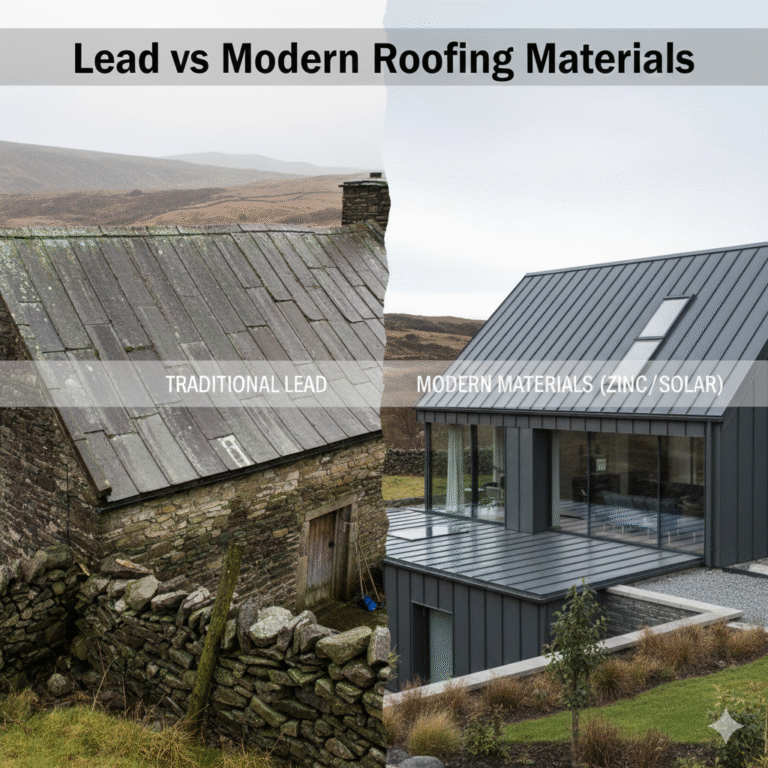
When weighing options between traditional lead and modern roofing materials, longevity, aesthetics, budget, property type, heritage requirements, and long-term cost-effectiveness are key factors. Lead remains the material of choice for projects where durability and heritage compliance are essential, while modern alternatives may suit projects with budget constraints or shorter-term requirements.
Lead offers unmatched durability, heritage appeal, and weather resistance, but comes at a higher cost and requires specialist installation. Modern materials provide flexibility, lower upfront costs, and increasingly strong performance, making them ideal for new builds or practical upgrades.
Here are the major differences between lead and modern roofing materials for Cumbrian roofs:
- Durability: Lead roofing can last over 100 years when installed and maintained correctly, making it one of the most resilient options. Modern materials like GRP or EPDM usually last 20–40 years and cannot match lead’s century-long performance.
- Aesthetics: Lead develops a natural patina over time, giving roofs a classic and refined look that complements period homes. Modern composites are functional but rarely achieve the same timeless charm, especially for heritage properties.
- Cost: Lead has a higher initial cost due to materials and specialist installation but proves cost-effective over decades. Cheaper modern options may need replacement one or two times in the same period, increasing long-term costs.
- Maintenance Requirements: Lead roofs are low-maintenance but require periodic inspections, particularly around joints and flashings. Modern materials vary, with synthetic slates and metal sheets generally needing minimal upkeep.
- Weather Resistance: Lead is highly weather-resistant, performing well in heavy rain, snow, and strong winds. Some modern materials, like fibre cement or cheaper synthetics, may be more prone to hail damage or frost cracking.
- Weight and Structural Impact: Lead is heavy, which can affect older cottages or post-war homes. Lighter modern materials like aluminium, copper, or synthetic slates are ideal for weaker roofs or retrofits.
- Installation Complexity and Time: Lead installation requires specialist skills and precise techniques, increasing cost and installation time. Modern interlocking slates and tiles are quicker and easier to fit, suitable for larger or modern builds.
- Environmental Impact and Sustainability: Lead is fully recyclable and environmentally friendly. Modern options vary, with aluminium and copper recyclable, while some synthetic materials are less sustainable.
- Thermal Performance and Insulation: Lead has low thermal insulation, so additional loft insulation is often needed. Modern materials, particularly composite slates, often offer better energy efficiency and heat retention.
- Fire Resistance and Safety: Lead is non-combustible and very safe against fire. Modern materials like metal sheets are also safe, though some composites or synthetics may be more vulnerable to high heat.
- Compliance with Building Regulations: Lead installation must comply with strict regulations, especially for listed buildings. Modern materials are usually simpler to certify and are often pre-approved for new builds.
- Compatibility with Existing Roof Structure: Lead is ideal for older or complex roof shapes and can be shaped to fit intricate lines. Modern materials suit new builds or simple pitched roofs but may need adjustments for complex areas.
- Repairability and Availability of Materials: Lead can be repaired in sections, blending seamlessly with the existing roof. Modern tiles or synthetic slates are easy to replace individually, but colour matching can sometimes be difficult.
- Local Expertise and Specialist Contractors: Lead requires specialist roofers, and finding experts in Cumbria can be limited. Modern materials are widely installed, so qualified installers are easier to find.
- Noise Insulation and Acoustic Properties: Lead is dense, helping reduce noise from rain or wind. Modern metal sheets are lighter and may be noisier unless fitted with additional insulation.
- Resistance to Corrosion and Staining: Lead develops a protective patina that prevents corrosion. Metals like aluminium and copper resist corrosion, while tiles or synthetics may stain or grow algae over time.
- Flexibility for Complex Roof Shapes: Lead is highly malleable, perfect for valleys, hips, and dormer windows. Modern materials may need custom cutting for complex shapes, adding cost and time.
- Impact on Property Value: Lead can increase property value, especially for heritage or conservation-area homes. Modern materials add value too, particularly when durable, low-maintenance, and energy-efficient.
- Suitability for Listed or Historic Buildings: Lead is often required for listed or historic buildings in Cumbria. Modern alternatives may be restricted unless they convincingly replicate lead’s appearance.
- Insurance and Warranty Considerations: Lead may affect insurance due to high replacement costs but is recognised for its durability. Modern materials generally come with manufacturer warranties, appealing to budget-conscious homeowners.
Durability
Lead roofing is renowned for its longevity. When installed correctly and maintained, lead can last 100 years or more, making it one of the most resilient roofing options available. It is naturally flexible, resistant to corrosion, and capable of withstanding extreme temperature fluctuations without cracking or warping.
Modern alternatives such as GRP (Glass Reinforced Plastic) or EPDM rubber membranes typically have shorter lifespans, ranging from 20 to 40 years depending on usage and maintenance. While suitable for specific applications, these materials cannot match the century-long durability offered by lead. For heritage properties, churches, and listed buildings, lead is often the preferred – and sometimes legally required – option due to its proven performance and compatibility with historic architecture.
In Cumbria, where roofs face constant rain and frost, the longevity of lead is a major selling point, but modern materials are improving rapidly and can still offer decades of protection.
Aesthetics
Lead provides an unmistakable aesthetic appeal. Over time, it develops a natural patina that gives roofs a classic, refined look, perfectly complementing period homes and older structures. Its visual authenticity is difficult to replicate with modern composites, which, although functional and versatile, rarely achieve the same timeless charm.
For projects in conservation areas or involving character properties, lead is often the more sympathetic choice, preserving architectural integrity while providing exceptional performance.
Cost
It’s true that lead roofing carries a higher initial cost, both in terms of materials and installation. However, its minimal maintenance requirements and extraordinary lifespan make it a highly cost-effective investment over time. A lead roof can outlast several cycles of replacement for cheaper modern alternatives, which may need to be replaced once or twice during the same period.
While modern systems may appear more affordable initially, homeowners and developers should consider the long-term value, durability, and protection that a lead roof provides – particularly in regions like the UK, where harsh weather can accelerate wear on less robust materials.
Maintenance Requirements
Lead roofs are low-maintenance but require periodic inspections, especially around joints and flashings, to prevent leaks. Modern materials vary: metal sheets and synthetic slates generally need little upkeep, while clay or concrete tiles may require occasional cleaning or replacement of broken units.
Weather Resistance
Cumbria’s weather can be harsh. Lead is highly weather-resistant, with excellent performance in heavy rainfall and snow. It’s also resistant to wind uplift due to its malleability.
Modern materials also offer good durability, but some, like fibre cement or cheaper synthetic slates, may be more susceptible to hail damage or frost cracking.
Weight and Structural Impact
Lead is heavy, which can affect the structure of older Cumbrian cottages or post-war homes. Some modern materials, like aluminium, copper, or synthetic slates, are significantly lighter, making them ideal for weaker roof structures or retrofit projects.
Installation Complexity and Time
Lead installation is specialist work requiring experienced roofers and precise techniques, which increases both cost and installation time. Modern roofing materials, particularly interlocking slates and tiles, are generally quicker and easier to install, making them suitable for larger or modern builds.
Environmental Impact and Sustainability
Lead is a fully recyclable material, which is a plus for environmentally conscious homeowners. Modern materials vary: aluminium and copper are recyclable, while some synthetic products may be less sustainable.
Thermal Performance and Insulation
Lead itself has low thermal insulation properties, so additional insulation may be needed in loft spaces. Modern materials, especially composite slates, often incorporate better insulation and energy efficiency, helping reduce heating bills in cold Cumbrian winters.
Fire Resistance and Safety
Lead is non-combustible, making it extremely safe against fire risks. Modern options vary: metal sheets are safe, but some composite or synthetic products may be more vulnerable to high heat, though still generally compliant with UK building regulations.
Compliance with Building Regulations
Lead installation is subject to strict building regulations, particularly for listed or historic properties. Modern materials are generally simpler to certify, with many pre-approved for new builds and retrofits.
Compatibility with Existing Roof Structure
Older stone cottages or terraced homes may be better suited to lead, which can be easily shaped to fit complex roof lines. Modern materials work well on new builds or simple pitched roofs, though some may require adjustments to battens or roof pitch.
Repairability and Availability of Materials
Lead can be repaired in sections, and repairs often blend seamlessly with the existing roof. Modern materials vary: tiles or synthetic slates may be easier to replace individually, but matching colours or finishes in the future can sometimes be challenging.
Local Expertise and Specialist Contractors
Lead roofing requires specialist skills, and in Cumbria, finding experienced lead roofers can be limited. Modern materials are widely installed, so finding competent installers is generally easier and faster.
Noise Insulation and Acoustic Properties
Lead is a dense material that can help reduce external noise from rain or wind. Modern metal sheets, while lighter, may be noisier in heavy rainfall unless fitted with additional insulation.
Resistance to Corrosion and Staining
Lead naturally develops a protective patina, which prevents corrosion over time. Modern metals like aluminium and copper are corrosion-resistant, while tiles or synthetic materials do not corrode but may show staining or algae growth over the years.
Flexibility for Complex Roof Shapes
Lead is highly malleable, perfect for valleys, hips, and dormer windows common in Cumbrian stone cottages. Modern materials may require custom cutting or shaping for complex areas, which can increase installation time and cost.
Impact on Property Value
A lead roof can increase property value, especially on heritage properties or in conservation areas. Modern materials add value too, particularly if they are durable, low-maintenance, and energy-efficient.
Suitability for Listed or Historic Buildings
Lead is often the only accepted option for listed buildings in Cumbria due to heritage requirements. Modern alternatives may be restricted in these cases unless they replicate the appearance of lead convincingly.
Insurance and Warranty Considerations
Lead roofing can affect insurance due to its high replacement cost, but reputable insurers recognise its durability. Modern materials usually come with manufacturer warranties, which can be attractive for new builds or budget-conscious homeowners.
How do I Choose between Lead and Modern Materials for a New Roof?
Choosing the right material involves balancing budget, property type, heritage requirements, and long-term performance. Lead is ideal for historic or complex roofs where durability and appearance are priorities. Modern alternatives suit new builds or straightforward roof designs, providing cost-effective and reliable performance.
It’s also important to consider local expertise. In Cumbria, specialist lead roofers are less common, so availability and cost of installation may influence the decision. Consulting a local roofing expert ensures the choice matches your home’s structure, style, and the harsh Cumbrian climate.
Is Lead Roofing Suitable for All Types of Homes in Cumbria?
Lead roofing is especially suitable for older or historic homes, cottages, and listed buildings due to its flexibility and long-lasting durability. Its ability to be shaped for complex roof lines, valleys, and dormer windows makes it ideal for properties with unique architectural features. In conservation areas, lead often meets regulatory requirements where modern materials may not.
For more modern homes, lead can still be used, but its weight may require structural reinforcement. Many homeowners opt for lighter modern alternatives, like synthetic slates or aluminium, which provide good durability and aesthetics without the same structural demands. The choice largely depends on property type, budget, and long-term maintenance plans.
How does the Weather in Cumbria Affect the Choice Between Lead and Modern Roofing Materials?
Cumbria experiences heavy rainfall, strong winds, and occasional snow, all of which put roofs under constant stress. It shows Cumbrian roofs are for sure affected by weather. Lead roofing performs exceptionally well in these conditions due to its malleability, water resistance, and ability to withstand frost without cracking. Its longevity makes it particularly advantageous in regions with challenging weather patterns.
Modern materials also offer resilience, but performance varies by type. For example, fibre cement or lower-grade synthetics may be prone to hail damage or frost-related issues. Metal sheets and high-quality composites are generally robust, but careful selection is essential to ensure the roof will handle Cumbria’s harsh climate over the long term.
Are Modern Roofing Materials More Cost-effective Than Lead?
Modern materials often have a lower upfront cost compared to lead, making them attractive for homeowners on a tighter budget. They are easier and faster to install, reducing labour costs, and many options like synthetic slates or metal sheets provide good durability at a fraction of the initial expense.
However, lead’s long lifespan means fewer replacements over time, potentially making it more cost-effective in the long run. While modern alternatives may need replacing once or twice within the same period, a lead roof can last a century with minimal maintenance. Homeowners should weigh initial savings against long-term performance and durability.
How Much Maintenance does a Lead Roof Require Compared to Modern Alternatives?
Lead roofs are generally low-maintenance, but regular inspections are recommended, particularly around joints and flashings, to prevent leaks or water ingress. Once installed correctly, lead rarely requires repairs and ages gracefully, developing a natural patina that protects it further.
Modern roofing materials vary in maintenance requirements. Metal sheets and synthetic slates often need very little upkeep, while clay or concrete tiles may require occasional cleaning and replacement of broken units. Choosing the right roofing material depends on the balance between desired lifespan and how much time you’re willing to spend on roof care.
Can Lead Roofing Increase the Value of a Property?
Yes, lead roofing can enhance the value of a property, especially if it is historic, listed, or located in a conservation area. The material’s longevity, aesthetic appeal, and heritage credentials are highly valued by buyers seeking authentic period features. A well-maintained lead roof is often seen as a premium feature.
Modern materials can also add value, particularly when they are durable, energy-efficient, and low-maintenance. For contemporary homes or renovations, a quality modern roof can provide significant aesthetic and practical benefits without the higher costs associated with lead. Ultimately, the choice depends on your property type and target market.
WestMorland Roofing combines expertise in both traditional and modern roofing systems to guide you in selecting the material that best meets your needs. Investing in the right roof today ensures protection, beauty, and peace mind for decades to come.