Chimneys take more punishment than almost any other part of a house. In Cumbria, stacks stand exposed to driving rain, gales off the Irish Sea and the fells, and hard winter frosts. Many homes – from stone cottages in the Lakes to Victorian terraces in Carlisle and Kendal – still have their original chimneys, and after decades of weather, most need attention at some point.
In this guide, our chimney repair team explains the most common chimney problems, how to spot them and the repairs that fix them properly.
Warning Signs Your Chimney Needs Attention
Inside your home
- Damp patches or brown staining on the chimney breast
- Peeling wallpaper, bubbling paint or blown plaster near the chimney
- Water or debris falling into the fireplace
- A musty smell around the chimney breast
- Damp timbers or insulation beside the stack in the loft
Outside
- Eroded, crumbling or missing mortar between the stones or bricks
- Spalled (flaking) bricks or loose stones
- Lead flashing that has lifted, split or slipped
- Cracked flaunching around the pots
- Loose, cracked or leaning chimney pots
- A stack that is visibly leaning
- Plants, moss or weeds growing from the stack
Common Chimney Problems and Repairs
1. Failed lead flashing
Flashing seals the joint between the chimney and the roof. When lead splits, lifts or comes loose, water runs straight into the roof space. The lasting fix is new, properly dressed lead flashing – front apron, soakers or step flashing, and a back gutter – tucked into freshly pointed joints. Read our guide to different roof flashing types and see our specialist lead work service.
2. Eroded pointing
Mortar wears away much faster than stone or brick, especially on exposed stacks. Repointing involves raking out old mortar and replacing it. On traditional stone chimneys, a breathable lime mortar is usually more appropriate than hard cement. See our flashing, pointing and rendering repairs service.
3. Cracked flaunching
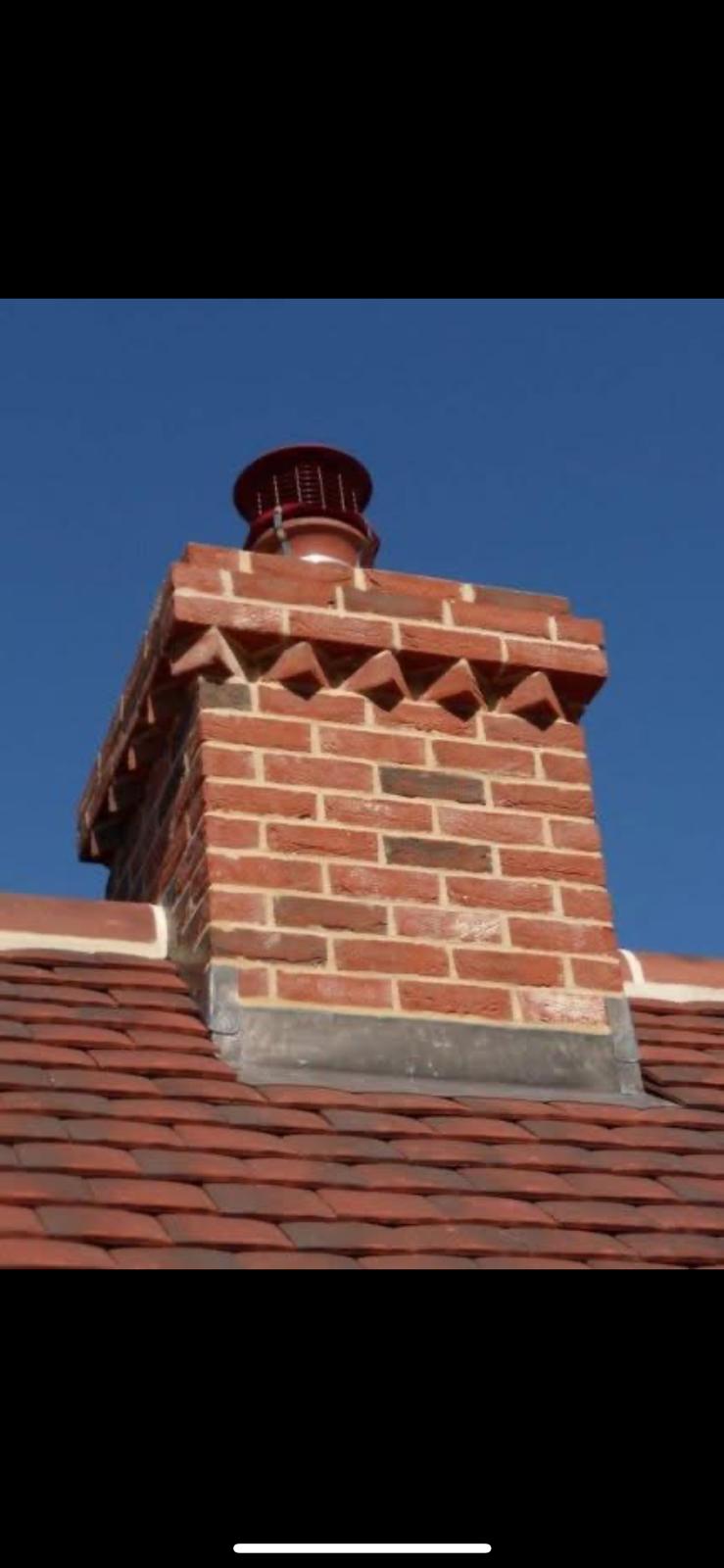
Flaunching is the sloping mortar cap on top of the stack that holds the pots and sheds water. It faces the sky and takes the worst of the weather. When it cracks, water enters the stack and pots can become loose – a real hazard in high winds.
4. Damaged or loose chimney pots
Cracked pots should be replaced before they fall. Unused flues can be fitted with ventilated caps to keep rain and birds out while allowing air to circulate.
5. Water entering unused flues
Rain falling down open, unused flues can cause damp on chimney breasts. A ventilated cap or cowl solves this. Sealing a flue completely at both ends should be avoided as it can trap moisture.
6. Leaning or unstable stacks
Sulphate attack, frost damage and weathering can cause stacks to lean or become unstable. These may need partial or full rebuilding, ideally reusing the original stone or brick to match the property.
Damp Around Your Chimney?
Our experienced team will inspect the whole stack – flashing, pointing, flaunching and pots – and give you a clear quote for a lasting repair.
Get a Free Quote →Call 01768 239415Why Cumbrian Chimneys Need Extra Care
- Exposure – many properties sit on hillsides or open ground where stacks face the full force of the weather
- Rainfall – parts of Cumbria are among the wettest places in England
- Traditional materials – stone stacks and lime mortars need sympathetic repair
- Freeze–thaw cycles – especially in upland areas, which break down mortar and porous stone
Our article How Does Cumbrian Weather Affect Roofs? explains these effects in more detail.
Chimney Sweeping and Maintenance
If you use an open fire or wood burner, regular sweeping is essential for safety and helps reveal problems early. Our chimney sweep service can be combined with an inspection of the stack and flashing.
Combine Chimney Work With Other Repairs
Scaffolding is often a significant part of the cost of chimney repairs, so it makes sense to deal with everything at once – flashing, pointing, flaunching, pots and any slipped slates or tiles around the stack. We will always inspect the surrounding roof while access is in place. See our roof repairs service.
Removing an Unused Chimney
If a chimney is no longer needed and is causing ongoing problems, removing the stack below roof level and slating or tiling over the gap is an option. On listed buildings, in conservation areas and within the Lake District National Park, consent may be needed – our heritage roofing team can advise.
Can You Repair a Chimney Yourself?
We strongly recommend against DIY chimney repairs. Working at height on a pitched roof is dangerous, and lead work and pointing are skilled trades. Temporary fixes with sealant or cement fillets usually fail quickly and can make damp worse.
Chimney Repair FAQs
How long do chimney repairs take?
Most flashing, pointing and flaunching repairs are completed within one to three days once scaffolding is in place.
How much do chimney repairs cost?
It depends on the height and size of the stack, the access required and the work needed. See How Much Does Roof Repair Cost in Cumbria? for general guidance.
Is a leaking chimney an emergency?
An active leak should be dealt with quickly to prevent damage to plaster, timbers and electrics. Our emergency roof repair service can help.
Lead or modern flashing materials?
Lead remains the traditional choice, but there are alternatives. Read Lead vs Modern Roofing Materials to compare.
Related Roofing Guides
Book a Chimney Inspection in Cumbria
From lead flashing and lime repointing to new flaunching, pots, caps and rebuilds, our experienced roofers fix chimney problems properly the first time.
Schedule a Booking →📞 01768 239415Covering Penrith, Kendal, Carlisle, Keswick, Windermere, Appleby-in-Westmorland and across Cumbria.