Finding water in your loft is alarming, and most people assume the roof is leaking. But in Cumbria’s cool, damp climate, one of the most common causes of moisture in the roof space is actually condensation.
Left untreated, condensation can soak insulation, rot rafters and battens, corrode nails and cause mould. In this guide, our roof and attic ventilation specialists explain the causes, the warning signs and the solutions.
What Causes Loft Condensation?
Everyday life – cooking, showering, drying clothes and breathing – produces warm, moist air. Some of it rises into the loft through gaps around the loft hatch, downlights, pipes and cables. When that warm air meets the cold underside of the roof, it cools and turns into water droplets.
Common contributing factors include:
- Too little ventilation at the eaves and ridge
- Insulation pushed into the eaves, blocking airflow from the soffits
- Extra loft insulation – which makes the roof space colder, increasing condensation if ventilation is not improved
- Old bitumen felt underlay that traps moisture
- Extractor fans venting into the loft instead of outside
- Unsealed loft hatches and gaps in ceilings
- Cold, damp weather – common through much of the Cumbrian year
Signs of Condensation in the Loft
- Droplets of water on the felt, nails or timbers
- Damp, compressed or stained insulation
- Black mould spots on rafters, battens or the loft hatch
- A musty smell in the roof space
- Frost on the underside of the roof on cold mornings
- Rusty nails and metal fixings
- Widespread water staining on bedroom ceilings
Condensation or Roof Leak?
- Condensation is usually spread across a wide area, worse in cold weather and can appear even on dry days
- A leak tends to be in one spot, often near chimneys, valleys, flashing or Velux windows, and appears after rain
- Condensation shows as droplets all over the underside of the felt; a leak usually leaves a trail or localised wet patch
If you suspect a leak, read 10+ early signs of roof leaks in Cumbria and what to do when your roof leaks.
Damp or Mould in Your Loft?
We will inspect your loft and roof, find out whether the problem is condensation or a leak and recommend the right fix. Book a free inspection.
Get a Free Quote →Call 01768 239415Roof Ventilation Solutions
The goal is a steady flow of air through the roof space – cool, dry air in low at the eaves and moist air out high at the ridge.
Soffit and eaves ventilation
Vented soffits or over-fascia vents let air into the loft at the eaves. These are often fitted when fascias and soffits are replaced.
Eaves ventilation trays
Fitted between rafters, these hold loft insulation back so it cannot block airflow from the soffits.
Ridge ventilation
Dry ridge systems often include continuous ventilation along the top of the roof. Find out more about our dry fix roofing service and read Dry Verge vs Wet Verge.
Tile and slate vents
Purpose-made vent tiles or slate vents can be added into the roof slope where ridge or eaves ventilation is limited.
Breathable membranes
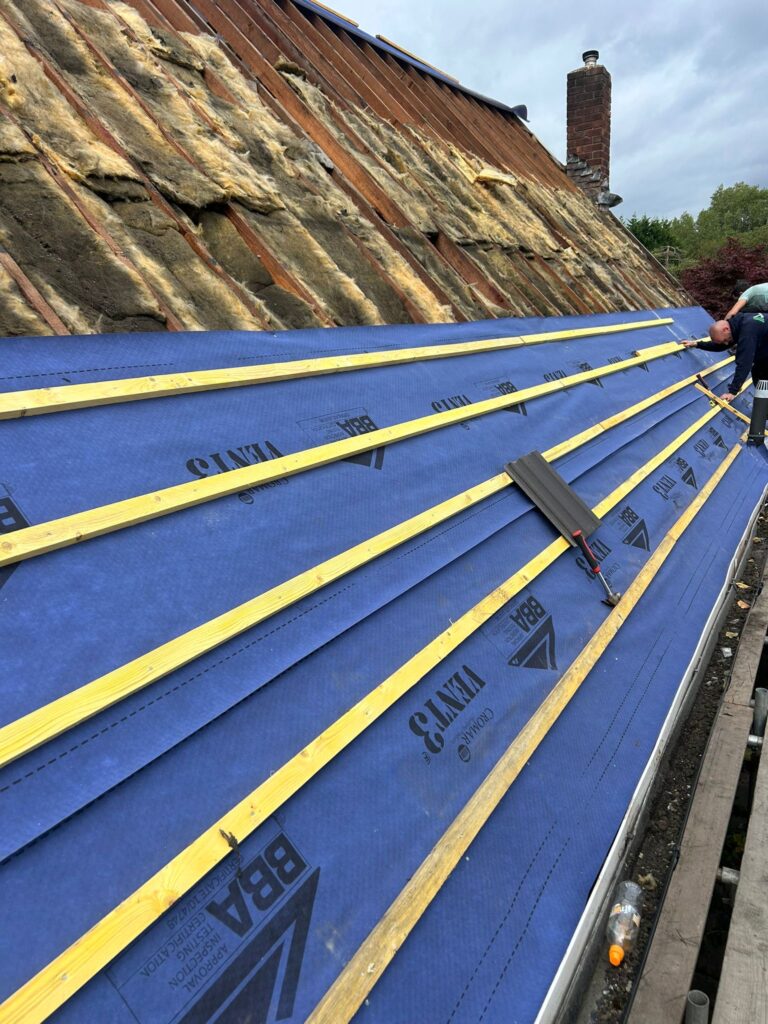
Modern vapour-permeable underlays allow moisture to escape through the roof. Upgrading from old felt is usually done as part of a roof replacement. You can also see our roof membrane service.
Simple Steps You Can Take
- Make sure bathroom and kitchen extractor fans vent outside, not into the loft
- Fit a seal around the loft hatch
- Seal gaps around pipes, cables and ceiling lights
- Keep insulation away from the eaves
- Avoid drying laundry indoors without ventilation
- Open trickle vents and use extractor fans, especially in winter
Older Cumbrian Homes and Ventilation
Many traditional stone cottages and farmhouses in Cumbria were built to “breathe”. Adding modern insulation, sealing gaps or fitting non-breathable materials can upset this balance and lead to damp. Careful, sympathetic ventilation is essential on older properties – see our guide to traditional Lakeland slate roofs and property types and architecture in Cumbria.
Velux Windows and Condensation
Rooms with roof windows can be prone to condensation on the glass. Keep the ventilation flap open where possible. If condensation forms between the panes, the sealed unit may have failed – see our Velux window repair service.
Why Fix Condensation Quickly?
- Wet insulation loses much of its effectiveness, raising heating bills
- Persistent damp can lead to rot in rafters and battens
- Mould can spread into rooms below
- Corroded nails can cause slates and tiles to slip
- Ceilings and electrical fittings can be damaged
Loft Condensation FAQs
Is some condensation normal?
Occasional light condensation on very cold mornings can happen. Regular droplets, damp insulation or mould mean ventilation needs improving.
Will more insulation stop condensation?
Not on its own – extra insulation makes the loft colder, so ventilation usually needs improving at the same time.
How do I know what is causing my damp?
A professional roof inspection will identify whether the problem is condensation, a leak or both.
How much does it cost to improve ventilation?
It depends on the solution. Adding vents can be straightforward, while upgrading underlay is best done during re-roofing. See how much roof repair costs in Cumbria.
Related Roofing Guides
Solve Loft Condensation for Good
Our experienced roofers will identify the cause, improve ventilation and carry out any repairs needed to keep your roof dry. Book your free inspection today.
Schedule a Booking →📞 01768 239415Covering Penrith, Kendal, Carlisle, Keswick, Windermere, Appleby-in-Westmorland and across Cumbria.