Drive through any Cumbrian town or village and you will see roofs covered in green moss. With some of the highest rainfall in England, mild damp winters and plenty of tree cover, Cumbria provides perfect conditions for moss and lichen to grow.
A little moss can look charming on a traditional cottage roof, but heavy growth can cause real problems. In this guide, our roof cleaning team explains when moss becomes a concern, what damage it can do and the safest ways to remove it.
Why Does Moss Grow So Well on Cumbrian Roofs?
- High rainfall and humidity – moss needs moisture, and Cumbria has plenty
- North-facing slopes – stay shaded and damp for longer
- Overhanging trees – create shade and drop organic debris
- Rough or porous surfaces – older concrete tiles and weathered slates give moss somewhere to take hold
- Rural and upland locations – clean air actually encourages lichens and mosses
Our article How Does Cumbrian Weather Affect Roofs? explains more about how the local climate affects different roof coverings.
Is Moss Bad for Your Roof?
A thin layer of moss is mostly cosmetic. Thick, established moss is a different story. Here is how it can cause damage:
1. It holds water against the roof
Moss acts like a sponge. It keeps tiles and slates wet for long periods, which speeds up weathering and can make porous tiles more vulnerable.
2. Frost damage
When water held in moss freezes, it expands. Over many winters, this freeze–thaw action can cause the surface of concrete tiles to break down and can crack older, weaker tiles.
3. Lifting tiles and slates
Thick clumps of moss can grow up under the edges and laps of tiles and slates, lifting them slightly. This lets wind-driven rain get underneath – a common cause of hidden leaks.
4. Blocked gutters and downpipes
As moss dries out, chunks are washed or blown into gutters, where they quickly cause blockages and overflowing. Read Why Are My Gutters Overflowing? to understand the knock-on effects.
5. Extra weight and damp
Saturated moss adds weight and keeps the roof structure damp, which in turn can affect battens and underlay over time.
Signs Moss Has Become a Problem
- Moss cushions thicker than a few millimetres
- Moss growing up under the edges of tiles or slates
- Gutters repeatedly blocked with moss
- Tiles or slates looking lifted, uneven or out of line
- Damp patches in the loft or on ceilings
- Green staining on walls below the roofline
Is Moss Taking Over Your Roof?
Our team provides safe, professional roof cleaning and moss treatment across Cumbria. Book a free inspection and quote.
Get a Free Quote →Call 01768 239415How Is Moss Removed Safely?
Manual removal (scraping and brushing)
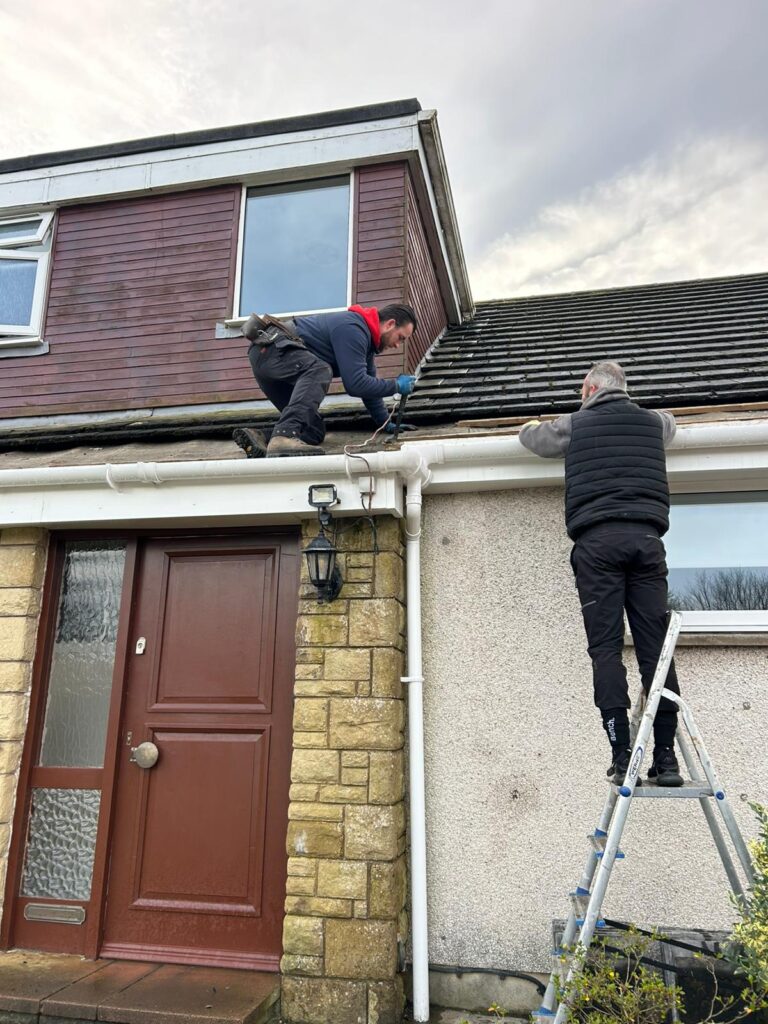
The safest and most common method. Moss is carefully scraped and brushed off by hand from the top of the roof downwards, so that water and debris run with the laps of the tiles rather than being forced underneath. It takes longer but avoids damage to the roof surface.
Biocide treatment
After removal, a specialist biocide is applied to kill remaining spores, roots and lichens. It continues to work for months after application, gradually cleaning the surface and slowing regrowth.
Low-pressure washing
Some roofs can be cleaned with low-pressure washing after moss has been removed by hand. This must be done carefully and is not suitable for every roof.
Why we avoid high-pressure jet washing
High-pressure washing can strip the surface from concrete tiles, crack older tiles and slates, wash away pointing and force water under the tiles into the loft. On many roofs it does more harm than good.
Should You Remove Roof Moss Yourself?
We strongly advise against DIY moss removal. Roofs are slippery – especially when covered in damp moss – and walking on tiles or slates can easily break them. Professional roof cleaners use roof ladders, scaffolding or access equipment and know how to clean without causing damage.
How to Stop Moss Coming Back
- Biocide treatment after cleaning slows regrowth significantly
- Trim overhanging trees to let in more light and reduce debris
- Keep gutters clear so water drains freely
- Consider a roof coating on suitable concrete tile roofs to seal the surface
- Regular inspections to catch regrowth early
Find out more about our roof coating and roof maintenance services. Note that coatings are not suitable for natural slate or many heritage roofs – see our Lakeland slate roof care guide.
Moss on Slate vs Tile Roofs
Natural slate is dense and naturally resistant to water absorption, so moss is usually less damaging than on porous concrete tiles. However, moss can still lift slates and block gutters. Learn more about the differences in Roof Slate vs Roof Tiles.
Roof Moss FAQs
When is the best time to remove moss?
Late spring and early autumn are ideal, when the weather is mild and moss is easier to remove. Biocide works best in dry spells.
How often should a roof be cleaned?
In damp parts of Cumbria, many roofs benefit from cleaning and treatment every few years, depending on shade and tree cover.
Can moss cause roof leaks?
Yes – by lifting tiles and blocking gutters, heavy moss can lead to water getting in. If you have a leak, read What to Do When Your Roof Leaks in Cumbria and see the early signs of roof leaks.
Will cleaning reveal other problems?
Sometimes. Once moss is removed, we can see cracked or slipped tiles more easily. We will always tell you if roof repairs are needed.
Related Roofing Guides
Get Your Roof Clean and Moss-Free
Our experienced roofers clean, treat and protect roofs across Cumbria without damaging tiles or slates. Book your free inspection today.
Schedule a Booking →📞 01768 239415Covering Penrith, Kendal, Carlisle, Keswick, Windermere, Appleby-in-Westmorland and across Cumbria.